


In Kunming’s markets, the air buzzes with stir-fried herbs and lime-dressed salads. Here, Yunnan Province cuisine comes alive. It’s a mix of Southeast Asian flavors and China’s traditions. Each street corner shares tales of spices, herbs, and dishes from riversides.
Traveling the Tea Horse Road, learn about Kunming’s unique geography. It sits where China’s highlands meet the tropics. This made it a key spot for traders, blending chili peppers, mushrooms, and tea. The outcome? A food scene that’s a bold mix of both.
Every bite here tells stories of old and new journeys. From street stalls to family restaurants, each dish is a fusion. You’ll find bamboo shoots with lemongrass and rice noodles with spicy Yunnan chilies.
Key Takeaways
- Kunming’s position as a trade hub creates a unique blend of Southeast Asian and Chinese flavors.
- Yunnan Province cuisine highlights ingredients like wild mushrooms and tea-infused dishes.
- Historical trade routes shaped the city’s dynamic culinary identity.
- Exploring Kunming offers a chance to taste traditions that span millennia.
- Local markets are where the essence of this culinary crossroads truly shines.

The Crossroads of Flavor: Kunming’s Unique Culinary Identity
Walking through Kunming’s markets, you’ll catch the scent of star anise, lemongrass, and smoked chilies. This mix of smells tells the story of centuries of food exchange. Kunming’s food culture is a blend of old traditions and new ideas, shaped by ancient trade routes and modern innovation.
Every dish here tells a tale of caravans crossing mountains and valleys. It’s a living archive of flavors.
Historical Trade Routes Shaping Local Tastes
Merchants who traveled Yunnan left more than just footprints. They brought spice blends from Tibet, soy sauces from central China, and lemongrass from Southeast Asia. These ingredients mixed into everyday dishes.
Dishes like crossing-the-bridge noodles were born from travelers’ needs for easy-to-eat meals. Now, they symbolize resilience and adaptation. Wild bamboo shoots and chili-infused oils in Kunming’s pantry tell stories of cultural exchange.
The Bridge Between Northern and Southern Asian Cuisines
“Our stews are like our geography—halfway between Sichuan’s boldness and Thailand’s brightness,” explained a vendor in the South Gate Market. This Northern Southern Asian food fusion is seen in dishes like flower stir-fries, which mix Thai herbs with Sichuan peppercorns. Even fermented fish paste in noodle broths shows Lao and Burmese influences layered over traditional Han techniques.

Why Kunming’s Food Scene Stands Apart
Kunming’s cuisine is unforgettable because of its raw authenticity. Foragers gather matsutake mushrooms from Yunnan’s forests. Flower petals are used in soups and salads, a practice from Dai and Bai traditions.
These unique Yunnan flavors—like bitter melon stuffed with fermented bean paste or tea-smoked duck—show a culinary language found nowhere else. It’s a cuisine that honors its past while defying categorization. It invites explorers to savor history in every bite.
A Cultural Melting Pot: Ethnic Diversity in Yunnan’s Kitchen
Exploring Yunnan’s villages and markets, discover stories in every dish. The Yunnan ethnic cuisine is a living history of minority food traditions. Here, 25 ethnic groups keep their flavors alive, just like their languages.
In Dai homes, you may learn about the dish called ghost chicken. It’s made with lemongrass and chili, turning tender meat into a spicy delight. The Bai’s ham is aged in the Himalayas, making it melt in your mouth. And Yi buckwheat pancakes have a rich, earthy taste.
- Dai: Ghost chicken’s spice lingers like a tropical storm.
- Bai: Cured ham aged to perfection, a symbol of patience.
- Yi: Buckwheat breads dense with ancestral wisdom.
The cultural diversity Chinese cooking is not just in recipes but in rituals too. At a Naxi family feast, you will see elders add wild herbs to stews. Each ingredient is a thread in Yunnan’s food heritage.
Foraged mushrooms, raised pigs, and tea-scented rice are the heart of this cuisine. Even in Kunming’s modern kitchens, chefs keep these traditions alive. They show that tradition and innovation can go hand in hand, like cardamom and chili in a stew.
My Culinary Tour of Kunming (Yunnan Province): A Personal Odyssey
Walking into Kunming’s markets was like waking up to a new world. The smell of smoked chilies and tea leaves filled the air. It led me to discover flavors that changed my view of food.
Every dish was a new story. From steamed noodles with pork broth to sweet bamboo shoots. These were moments that made my journey unforgettable.
First Impressions and Flavor Revelations
The first taste of guoqiao mixian (cross-bridge noodles) was unforgettable. It was like drinking liquid silk. Vendors made the dish right in front of me, adding layers of meat and greens.
They say, “The noodles need three hours to simmer; patience is key.” Wild mushrooms added a depth of flavor I’d never tasted before.
Unexpected Dishes That Changed My Perspective
At a Dai minority stall, try a curry of huaerguo (flower fruits). It is a mix of sweet and spicy that will change how you view Chinese food. The vendor, Li Mei, claims they’ve made it for generations.
Wild herbs like gacai (pickled mustard greens) in a pork belly dish showed me Yunnan’s bold flavors. It is a taste that went beyond borders.
The Spice Route Legacy: How Trade Shaped Yunnan’s Palate
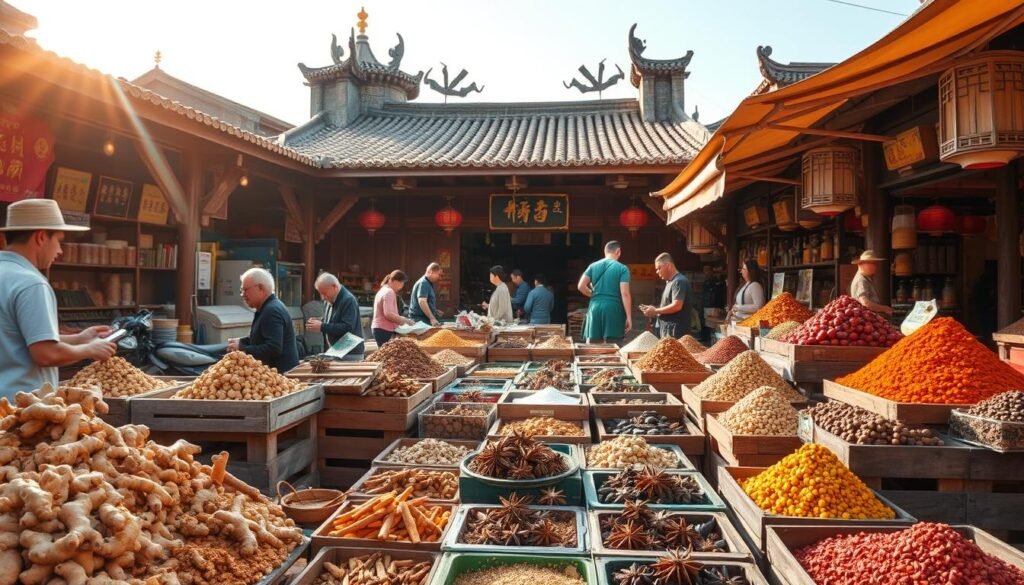
Walking through Kunming’s morning markets, you feel the spice trade Yunnan has seen for ages. Cloves and star anise sit next to local herbs. They show the old trade routes from Kunming to Mandalay and more. Here, you taste history as much as you see it.
Ancient Connections to Southeast Asian Flavor Profiles
Your first taste of Yunnan’s flavors was at a Xishuangbanna stall. A han (herb) soup mixed Thai lemongrass with local wild mushrooms. These Southeast Asian tastes are in dishes like xiāo mǐ gōng bāo (rice noodles with galangal). Here, Laos-inspired flavors meet Yunnan’s herbs.
- Lemongrass: Key in zha jiang mian noodle broths
- Galangal: Adds flavor to Dai minority villages’ fermented fish pastes
- Bird’s eye chilies: Add heat to cu la street snacks
The Tea Horse Road’s Influence on Local Cuisine
Long ago, the Tea Horse Road brought more than tea—it brought cooking skills. In Puer’s tea mountains, I tried chá yān ròu (tea-smoked duck). Its smoky taste comes from old preservation methods. Innovations from traders live on in zha pei (clay pot stews), where tea leaves flavor proteins for long journeys.
| Trade Item | Culinary Legacy |
|---|---|
| Tea leaves | Infusion techniques in braised dishes |
| Wild herbs | Mountain stew bases |
| Pickling methods | Preservation of meats across the Tea Horse Road |
These tastes are not just old stories—they are alive today. A vendor in Lijiang said, “We don’t sort spices by where they come from; we taste the roads they traveled.” This view makes Yunnan’s food a delicious history lesson.
Must-Try Dishes That Define Kunming’s Food Scene
Cross-Bridge Rice Noodles are very interesting. They are a mix of hot broth, soft noodles, and toppings. This dish shows how Kunming’s food combines tradition and drama. It’s said to have been made by a scholar’s wife to feed her studying husband.
- Steam Pot Chicken: This dish uses a clay pot to keep flavors of ginger, herbs, and chicken inside. It’s served with Yunnan ham, making it a special treat.
- Er Kuai: These rice cakes are pan-fried or wrapped in bamboo leaves. They’re simple but delicious, often enjoyed with chili oil or honey.
- Ru Bing: This creamy cheese is made from milk and herbs. It’s sold in palm leaves by street vendors in old town Kunming, a tasty snack.
Trying these dishes is like discovering Yunnan’s heart. Like Tuscany’s truffles or Kyoto’s kaiseki, they connect us to the land and history. For example, Wild Mushroom Hotpot is a mix of earthy flavors from foraged fungi and rice noodles.
“The best Kunming dishes are alive; they change with seasons and hands that prepare them,” shared Grandma Li, a vendor at Dongfeng Market. Her steamed rice rolls filled with pickled mustard greens proved her words true.
From the smoky taste of cured ham to the duck blood and vermicelli soup, every dish tells a story. These meals are more than food; they’re a way to connect with Yunnan’s culture.
Beyond Rice: The Diverse Staples of Yunnan Cuisine
A journey through Kunming’s kitchens shows a world where grains and proteins are more than usual. Rice is common in China, but Yunnan has its own unique choices. These choices tell stories of adaptation and abundance in every dish.
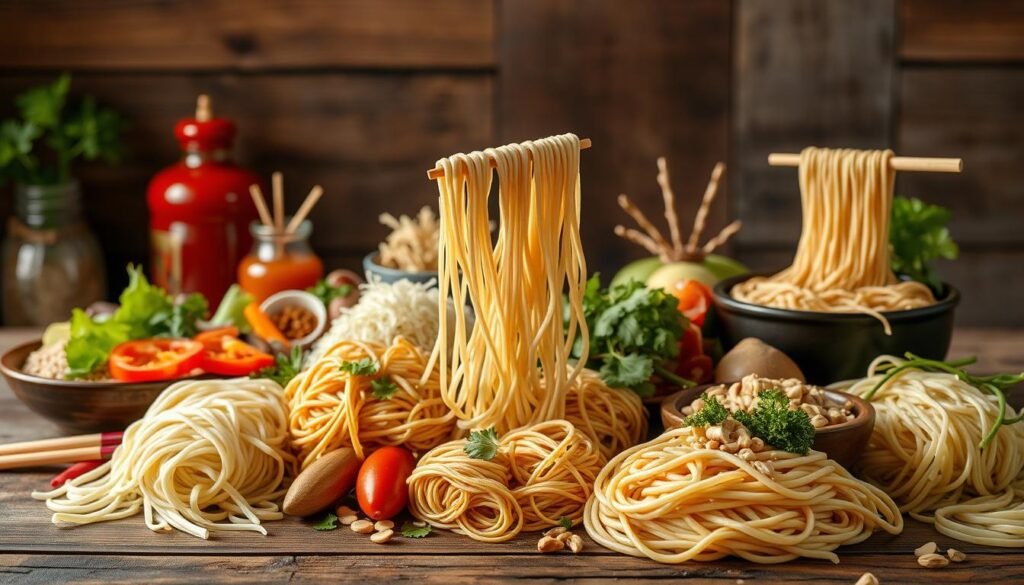
The Many Faces of Yunnan Noodles
Yunnan noodles come in many forms. In Kunming’s markets, find Cross-Bridge Noodles with their silky texture. Daoxiaomian noodles are elastic, and Mixian buckwheat noodles have an earthy taste. Each type reflects the region’s climate and traditions.
Unexpected Grains and Their Preparation Methods
Yunnan’s mountains led to the use of alternative grains. Buckwheat baba flatbreads are warm and nutty. Corn dough is used to make steamed pockets with spiced pork. Barley porridges and millet pancakes are simple yet creative.
The Mushroom Kingdom: Yunnan’s Fungal Obsession
Yunnan’s forests are home to over 800 wild mushroom species. At Shilin’s night market, chefs cook matsutake and guanyincao into golden stir-fries. A forager said, “These fungi are our legacy,” highlighting the importance of wild mushrooms in Yunnan’s cuisine.
Exploring Yunnan’s staples is like learning about its history. It’s a story of survival and passion. In Dali, enjoy a buckwheat noodle bowl and realize Yunnan’s table is a living archive. Even Verona’s pasta alle zucchine palesi can’t compare to Yunnan’s rich stories of grain and earth.
Street Food Adventures: Navigating Kunming’s Markets and Stalls
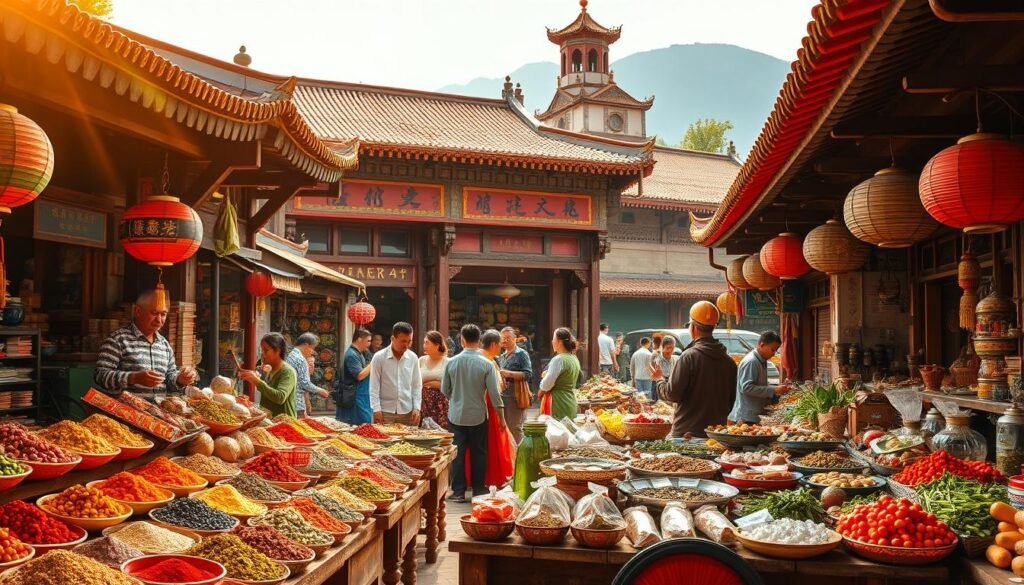
Before dawn, Kunming’s best food markets Yunnan buzz with life. Vendors arrange bamboo baskets of wild mushrooms and smoked pork. Their stalls shine under lanterns.
As you walk by stalls making Kunming street food favorites like er kuai—crispy rice cakes with chili paste. And zi la jiao stew simmering over charcoal. The smell of roasted chestnuts mixed with fermented soybean sauce.
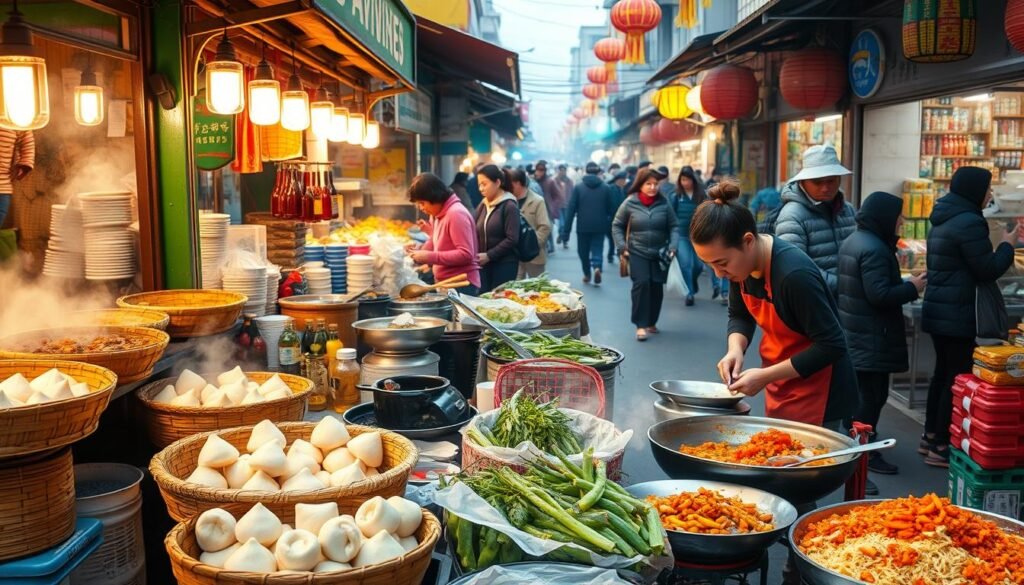
At midday, local food stalls Kunming become busy and creative. A vendor in Wuhua District showed me how to make xi mian (rice noodles) in broth. She said, “Always stir clockwise, or the flavors won’t come alive.”
“These streets are my kitchen,” said Li Mei, a third-generation owner of a century-old stall selling shuanian noodles. “Every bite here is a promise to Yunnan’s past.”
As dusk arrives, Qingnian Road is an intriguing destination. You will findmokers gathering around sizzling goat meat skewers. Neon lights danced in steaming pots of er kuai. Children run between carts selling honey-soaked lotus root chips. Here, Kunming’s heart is in every flavor. Every vendor’s story is as deep as their dishes.
The Modern Kunming Restaurant Scene: Tradition Meets Innovation
In Kunming’s trendy Cuihu District, find places where old flavors meet new ideas. Modern Yunnan cuisine here is all about balance. It’s a mix of old and new in every dish.
Contemporary Chinese chefs in these restaurants are reimagining classics. They do it without losing the essence of the dishes.
Up-and-Coming Chefs Redefining Yunnan Cuisine
At Harmony House, Chef Li Wei turns his mom’s recipes into modern dishes. His “Mountain Mist” dish is a twist on pickled greens. It’s a mix of tangy brine and herbs.
“We’re not throwing out tradition,” he said. “We’re just giving it a new voice.”
At Wild Harvest, Chef A-Ping, a Lisu minority, smokes pork belly with tea spices. These chefs show that innovation respects heritage.
Fusion Experiments Worth Seeking Out
Fusion food in Kunming is real. At Lantern Bistro, a French chef mixes Yunnan mushrooms with truffle oil. It adds a deep umami flavor.
At Yi Kitchen, a ham terrine blends local pork with Italian methods. It shows how fusion can bring cultures closer. “Great fusion starts with respect,” said owner Chen Xiao.
These places are more than restaurants. They’re labs where tradition sparks new ideas. Every bite in Kunming’s modern scene tells a story of mountains and forests, yet looks to the future.

The Art of Yunnan Tea Culture and Its Culinary Pairings
In a dimly lit tea house near Kunming’s Green Lake Park, the steam from a clay pot rises like a silent prayer. The scent of aged leaves—Yunnan Pu’er tea—mingles with the hum of conversation. This is where Yunnan’s liquid legacy unfolds, a ritual as vital as the region’s famed mushrooms or fiery chilies.
Pu’er Tea: A Leaf’s Journey Through Time
An encounter with tea food pairings begins in a shop where shelves hold cakes of compressed Yunnan Pu’er tea. Masters there teach how to cup your palms around a porcelain cup, savoring raw pu’er’s brisk, forest-floor notes versus ripe pu’er’s velvety sweetness. Aged batches, some decades old, revealed hints of cocoa or dried fruit—proof that time transforms this leaf into something almost mystical.
When Ceremony Becomes Conversation
At a family-owned tea den, witness Chinese tea ceremonies that turn steeping into theater. A server’s hands move like brushstrokes, pouring steaming liquid in a slow spiral. The ritual pairs with nibbles of candied ginger, roasted chestnuts, or almond cookies dusted with salt. These snacks aren’t random—they balance the tea’s bitterness, a tradition rooted in traditional tea culture China’s wisdom.
- Preserved plums to cut through earthy pu’er
- Crisp rice cakes for crisp tea moments
- Lotus seed paste tarts for dessert-style sips
Every sip here feels like a dialogue between leaf and palate. It’s more than tradition—it’s a language Yunnan has perfected for millennia.
Controversial Takes: What Western Diners Get Wrong About Kunming’s Food
Exploring Yunnan’s kitchens shows how authentic Yunnan food often challenges what people think. Many visitors expect dumplings or spicy Sichuan dishes. But Yunnan’s flavors are unique, not just a copy of others. Chef Li Mei from Epicurean Escape said, “You can’t taste the mountains by comparing them to plains.”
“Western interpretations Chinese food often flatten Yunnan’s complexity into ‘exotic’ checkboxes,” explained Master Chef Zhang at Kunming’s historic Moonlight Market. “Our cuisine is a language; misunderstanding the dialect doesn’t mean the message is wrong—it means you’re listening too selectively.”
There are three main mistakes:
- Categorizing everything as ‘typical Chinese’—ignoring Yunnan’s Southeast Asian spice routes.
- Reducing diversity to tourist staples like overpraised “rice noodles” while missing 300+ mushroom varieties.
- Judging textures like silken tofu or fermented greens through Western palates, dismissing their role in Yunnan’s medicinal culinary philosophy.
Culinary authenticity China is more than just trying new foods—it’s about curiosity. Tradition here is not just old, but alive. Embracing Yunnan’s uniqueness is about broadening our view of food.
How Climate and Geography Shape What’s on Your Plate in Kunming
Exploring Kunming’s markets, notice how the region’s diverse landscapes influence its cuisine. The mountains, valleys, and plateaus create unique microclimates. These areas produce ingredients found nowhere else.
A local forager once took me on a journey through these landscapes. We found wild fungi in the misty highlands and chili peppers in the subtropical warmth. These ingredients are a big part of every dish.
“Our hills don’t just grow food—they sing it,” said Chef Li Mei of Dali’s Mountain Kitchen. “Every slope’s terroir Yunnan cooking tells a story.”
Seasonal eating in Kunming is more than a tradition—it’s essential. In spring, markets are filled with bamboo shoots and orchids. Winter brings hearty stews made with preserved meats.
This cycle mirrors nature’s rhythms, not just restaurant trends. At Dianxi Old Street, learn how altitude affects taste. Ham cured in Shangri-La’s thin air is sharper than lowland varieties. Even tofu is different, crisper in cool northern villages and silky in the south.
But change is coming. Rising temperatures are altering harvest times. Farmers now plant mushrooms months earlier, changing traditions. Yet, innovators like the Nu River Collective are blending old and new. They ferment tea in solar-heated chambers to preserve terroir while adapting.
| Factor | Influence |
|---|---|
| Elevation | Distinct flavor profiles in fungi and meats |
| Rainfall patterns | Seasonal produce availability |
| Soil types | Herb and spice potency |
Conclusion: Why Kunming Deserves a Place on Every Food Lover’s Bucket List
A Culinary Tour of Kunming shows a city where every bite has a story. It’s not just a stop on food tours in China. It’s a living history of Yunnan’s spice routes and ethnic traditions.
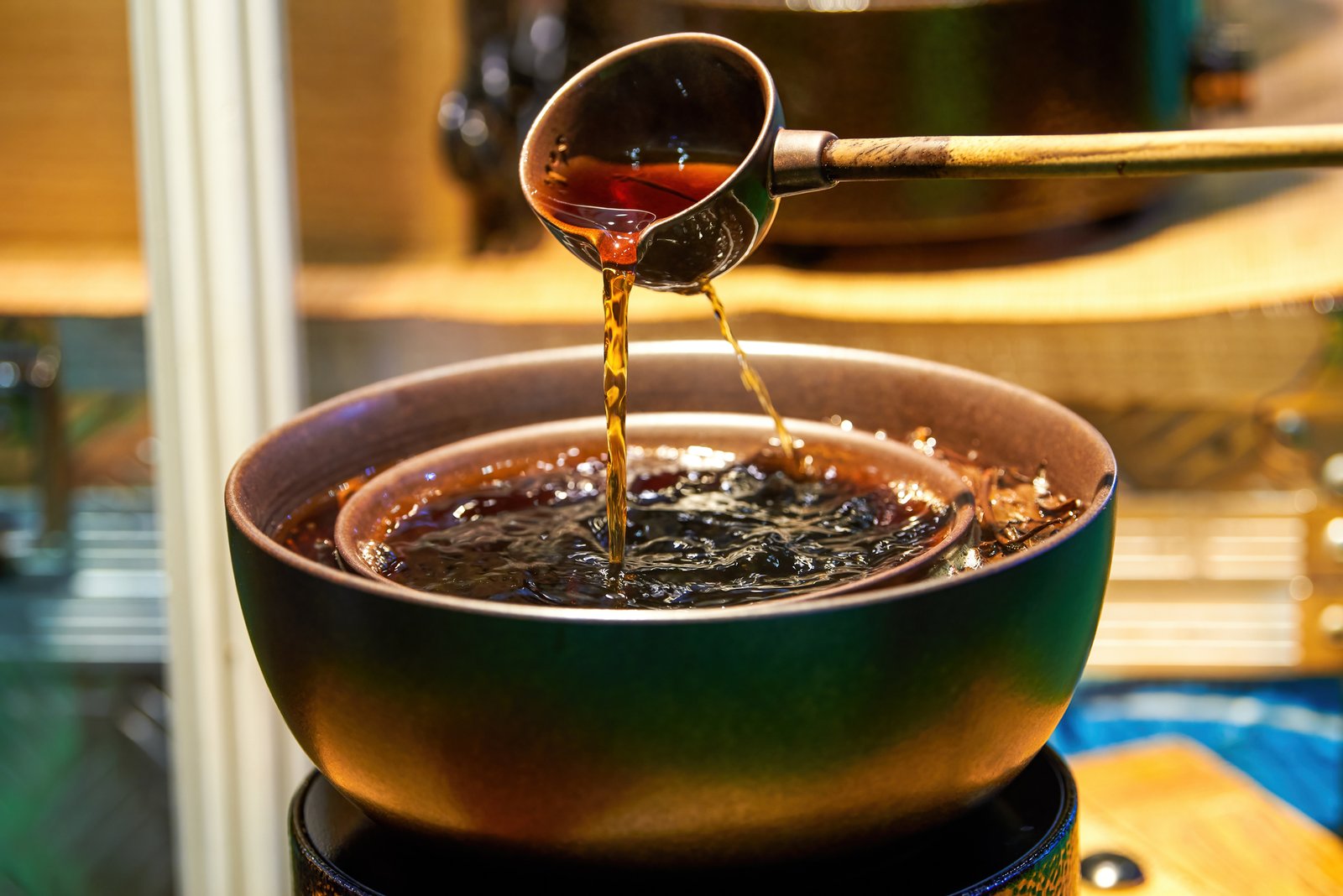
The flavors here, from spicy Xuanwei ham to earthy Pu’er tea, show its role as a bridge. It connects China to Southeast Asia.
Food tourism in Yunnan thrives in Kunming. The city’s markets and kitchens celebrate diversity and cultural exchange. Even seasoned travelers find this cuisine welcoming.
Walking through South Street’s stalls or eating at a family noodle shop shows the city’s warmth. This warmth goes beyond language. The best times to enjoy this are autumn for wild mushrooms or spring for flavored teas and desserts.
Kunming balances new ideas with respect for tradition. Modern chefs update old recipes, while village kitchens keep ancient methods alive. This makes it a unique Chinese food destination.
Every dish here is a mix of tradition and adventure. For those looking for more than food, Kunming offers a peek into how geography and culture shape taste. It shows that great food is not just eaten, but experienced.