Walking through Old Montreal, you catch the scent of croissants from a boulangerie. The smell of smoked meat from Schwartz’s draw you in. This city blends European traditions with North American flair, making its cuisine unique. The air fills with the stories of French baguettes and Quebec maple syrup, of poutine with a twist.
For American food lovers, Montreal offers Europe’s tastes without flying across the ocean.
Here, food scene is all about balance. A flaky tourtière or a smoky sandwich tells you about European roots. But local wild blueberries or mushrooms add a Canadian touch. This mix of old and new makes Montreal a top food destination, where every meal celebrates different cultures.
Key Takeaways
Montreal cuisine blends European influences in Montreal food with local ingredients, creating a unique North American culinary destination.
Iconic dishes like poutine and smoked meat showcase the city’s ability to transform tradition into modern comfort food.
The Montreal food scene offers accessible European flavors without international travel, appealing to American epicureans.
Seasonal markets and year-round festivals highlight the city’s commitment to fresh, culturally rich dining experiences.
Exploring Montreal’s eateries reveals a culinary language where French technique meets North American creativity.
The Culinary Melting Pot: Montreal Gastronomic Identity
As you walk through Old Montreal’s markets, you learn a lot. The city’s food history is in every bite. French-Canadian cuisine is the base of tradition here.
Think of buttery tourtière pies or Sunday suppers that last all day. These dishes are more than food; they’re family treasures passed down through generations.
French Foundations: The European Cornerstone
In a cozy bistro, you try French-Canadian cuisine with a twist. Maple-glazed salmon over wild rice becomes a hit. It shows you how French cooking meets Quebec’s flavors.
Even today, dishes like poutine keep its old-world charm. It’s a tribute to Quebec’s diner culture from the 1950s.
Indigenous Influences: Honoring the Land’s Original Flavors
“The Three Sisters—corn, beans, squash—teach you to live in harmony with this land, as they did long before settlers came.”
Today, you see this wisdom in dishes like nanamagan wild rice salads. At markets like Atwater, you can find smoked whitefish and foraged fiddleheads. Maple syrup, a Quebec staple, comes from Indigenous harvesting.
Immigrant Contributions: A Global Pantry
City’s multicultural food scene is the heart of the city. You’ll find Portuguese pastéis de nata and Syrian kibbeh side by side. Saint-Laurent Boulevard is a food lover’s dream.
Guides from Epicurean Escape can show you around. They’ll take you to places with Korean-Mexican tacos and Algerian couscous. Each neighborhood has its own story to tell.
In this city, food scene is a mix of old and new. Every dish tells a story of migration, memory, and cultural meeting.
A Brief History of How Montreal Became a Food Destination
Walking through Old Montreal, the Montreal culinary history comes alive. You can talk to veteran chefs who share how French settlers mix Parisian cooking with local ingredients. They use maple syrup and wild game, starting a tradition that’s loved today.
By the 17th century, monasteries start playing a big role in cooking. At the Hôtel-Dieu Hospital, you see sisters crafting butter tarts with local berries, filling the kitchen with warmth and tradition. That same spirit lives on today and you become part of it with every bite.
Period
Key Influence
Legacy
17th–18th Century
Convent kitchens preserving French techniques
Traditional dishes like tourtière and poutine’s roots
Early 1900s
Railway trade boosting access to global spices
Rise of Montreal food destination development as a multicultural hub
1980s–Present
Chefs like Normand Laprise revived Quebec food culture
Modern evolution of Montreal cuisine blending terroir and innovation
“Our kitchen is a time machine—every sauce tells a story,” Chef Marie-Andrée Bélanger of Aux Anciens Canadiens tells you, a restaurant you’ll visit many times. Her words show how Montreal’s chefs respect the past while exploring new flavors.
City’s food story spans from fur traders to today’s Michelin-starred chefs. It’s a tale of tradition and innovation. Discover more on culinary heritage tours, where every dish tells you story.
Why Culinary Travel to Montreal, Quebec Should Top Your Bucket List
As you explore Montreal’s neighborhoods it’s tasting like a global feast. You see its markets and bistros, and few cities compare. Quebec’s food tourism is a must-see for food enthusiasts.
The Unmatched Food Diversity
Here, streets are a culinary journey. In the Plateau, you can enjoy Portuguese noix de St-Jacques grilled to perfection. Near the Old Port, you savor French coq au vin in old cellars. Even Little Italy’s pasta al forno rivals Rome’s.
This city’s food is more than layers—it’s a vibrant mosaic.
Accessibility for American Travelers
Montreal is a food lover’s gateway for U.S. travelers. Flights from NYC are just 1.5 hours. The Canadian dollar also offers 15–20% savings on meals.
Navigating is easy: menus are in French and English. A “Bonjour” gets you better service. Download Metro’s app for car-free exploration of 192 neighborhoods.
Year-Round Gastronomic Festivals
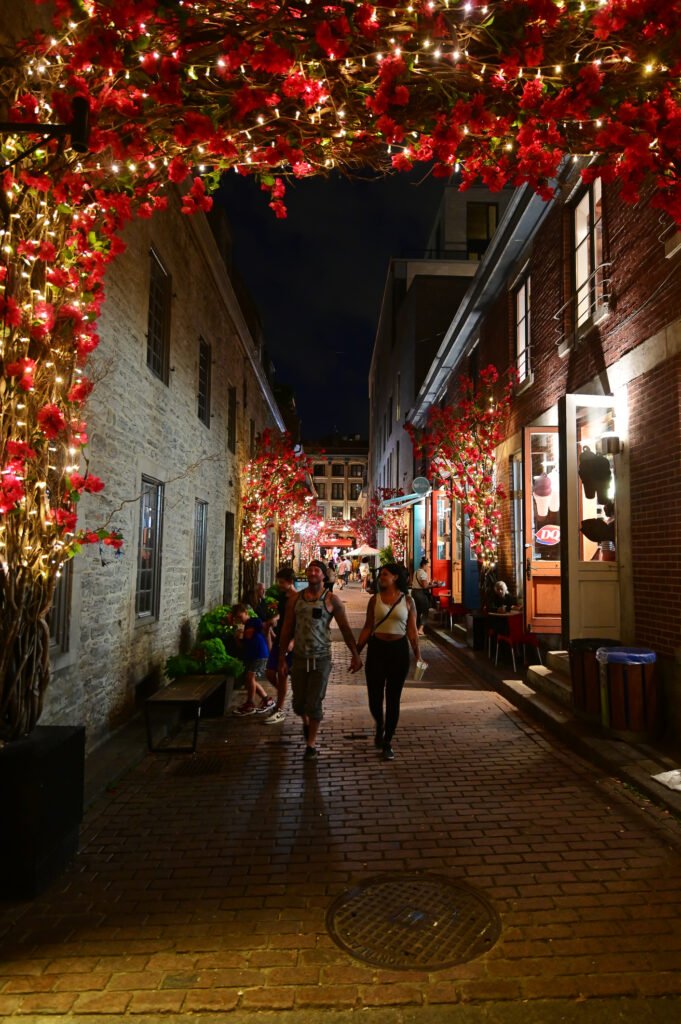
Saint-Amable Street (Rue Saint-Amable) In Old Montreal At Night. Quebec, Canada. July 2024
Festival
Season
Flavor Focus
Les Fêtes de la Mode
Summer
Street food pop-ups + craft cocktails
Poutine Week
February
Comfort food innovation (try cheese curds from L’Artisan Fromager)
Fête des Neiges
Winter
Hot chocolate bars + maple-infused treats
Montreal en Lumière is best choice in winter. Historic hotels offer tasting menus under snow-lit skies. Visit any season for unique flavors. Summer’s terraces and winter’s cabanes à sucre tell Quebec’s food story.
Old Montreal: Where Cobblestone Streets Lead to Culinary Treasures
As you explore Old Montreal, you find its historic dining spots feel like stepping back in time. You’ll find 18th-century warehouses turned tasting rooms and hidden cafés with the scent of fresh bread. Your top pick can be a former fur-trading post now a Montreal fine dining gem, where each dish celebrates the city’s French-Canadian heritage.
Restaurant
Signature Dish
Why Visit?
Le Saint-Sauveur
Poutine revisitée avec croussant de canard
Housed in a restored 1700s chapel; duck confit poutine redefines comfort food
La Maison du Père Bouchard
Tourtière de caribou
Operated for 100 years; try Quebec’s iconic meat pie in its original setting
For secret spots, look for best restaurants in Old Montreal that locals love. Café Olimpico is next to Notre-Dame Basilica, and a seafood shack near Vieux-Port serves mussels in garlic butter. Your favorite find? A wine bar in a basement near Place Jacques-Cartier, where they pour rare wines and serve caribou tartare.
“Here, every table tells a story older than the city’s cobblestones.”
Book ahead for the top historic dining spots in Montreal. They offer menus that blend tradition and new flavors. Whether it’s enjoying tourtière in an old space or finding a pastry shop that’s been baking for over a century, Old Montreal’s restaurants are more than food. They’re windows into Quebec’s culinary past.
Iconic Montreal Dishes You Simply Must Try
Montreal’s culinary soul shines in its iconic dishes. These must-try foods are like love letters to the city’s heritage. Your journey begins with Schwartz’s peppery smoked meat on rye with mustard.
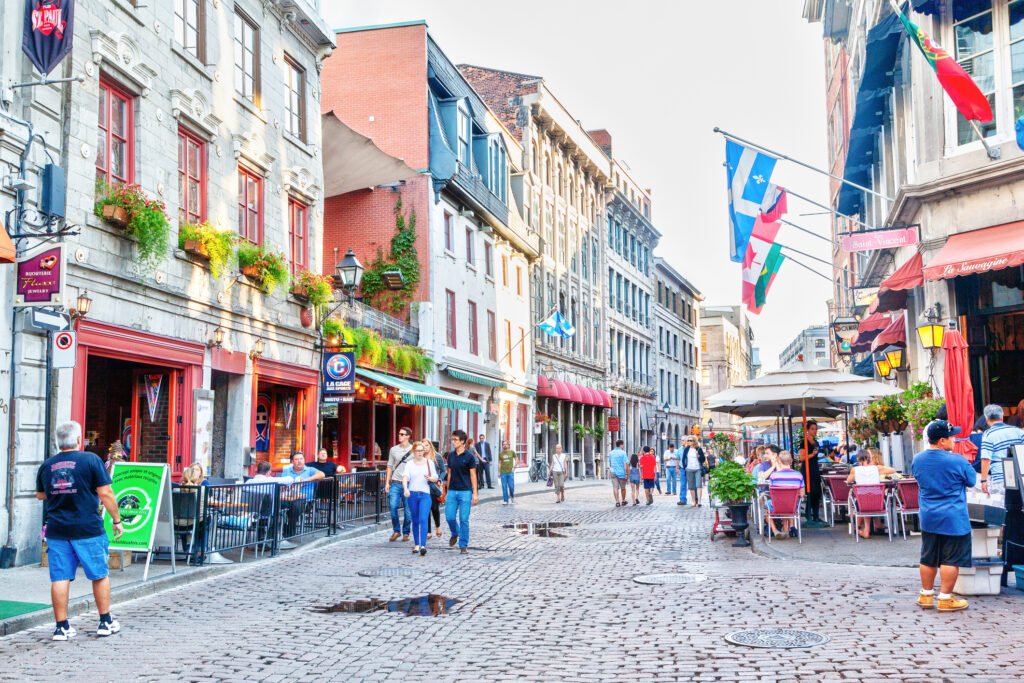
Historic Old Montreal Street Scene In Quebec, Canada. Montreal, Canada – Aug 20, 2012: People Meander At The Junction Of Rue Saint-Paul And Rue Saint-Vincent In The Old Montreal Section Of Montreal. They Are The Oldest Streets In Montreal, Quebec, Canada, Famous For The Restaurants And Unique Shops.
St-Viateur’s wood-fired bagels are another must-try. They’re warm from the oven and have a honey-sweetened crust. Enjoying them at 5 a.m. with locals shows their timeless appeal.
Poutine is famous in Montreal. It turns humble fries into art with squeaky curds and thick gravy. These dishes are more than snacks; they’re cultural touchstones.
Traditional Quebec dishes like tourtière and pouding chômeur show the city’s history. At Marché Atwater, you can enjoy buttery shellfish platters. Even Portuguese chicken joints like A Lanchonete da Maria offer bold spices.
Each bite of these dishes unlocks Montreal’s soul. They celebrate tradition and are as lively as the city’s streets. These aren’t just meals; they’re invitations to taste the city’s heartbeat.
The Montreal Bagel vs. New York Bagel Debate:
The Montreal bagels vs New York bagels debate is fierce. Growing up in Brooklyn, you love the dense, sesame-crusted bagels. But then, you discover wood-fired bagels. They are smaller, with a honey-kissed crust, opening up a new world of flavors.
The Wood-Fired Difference
Visiting a bakery at dawn becomes magical. You see dough turned into rings, then into wood-fired ovens. The maple and oak smoke give them a unique taste. The oven’s heat created caramelized patches, unlike anything from New York.
Texture and Taste Comparison
These bagels have a crackling shell and soft inside, unlike New York’s chewy ones. They’re sweet, thanks to the honey, and perfect with smoked salmon. Try them with a herb-accented spread for a delicious mix.
Where to Find the Best Bagels in the City
St-Viateur’s signature smoky kiss
Fairmount’s crackled edges and honey tang
Les Bageliers’ modern twists on wood-fired Montreal bagels
The best bagel shops show it’s not about winning. It’s about enjoying two unique traditions. Let your taste buds choose between a sandwich canvas or Quebec’s oven-fired art.
While poutine gets all the attention, you discover many other comforting dishes in Quebec. In a cozy bistro in Plateau-Mont-Royal, you try cipâte. It’s a meat pie filled with venison, wild mushrooms, and herbs. The flaky crust reflects Quebec’s rural heritage.
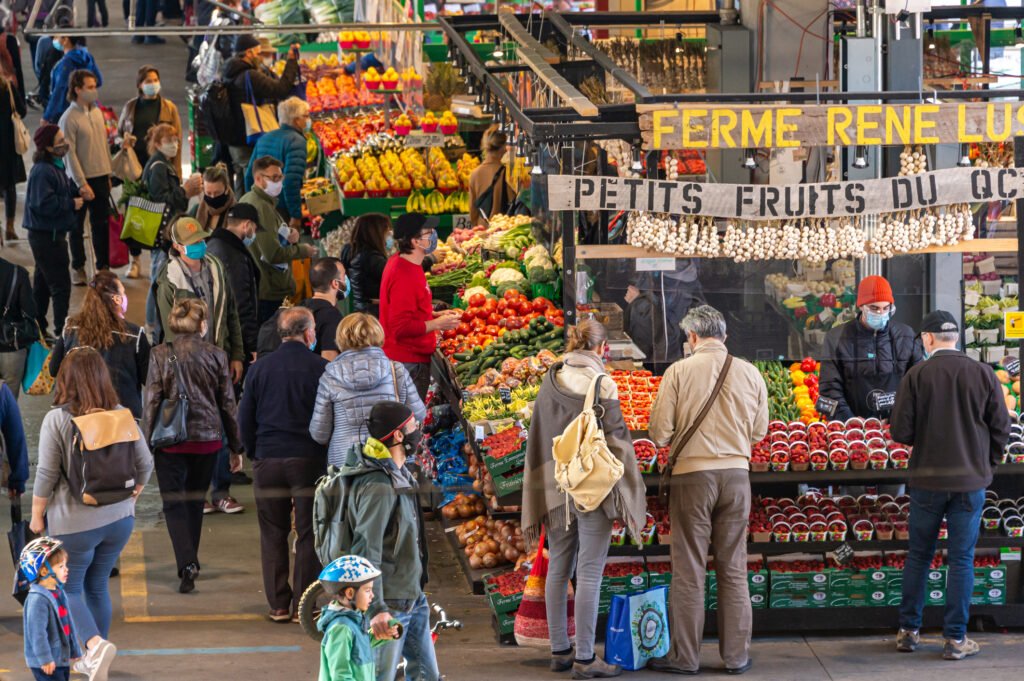
Montreal, Ca – 4 October 2020: Customers At Marche Jean Talon Market During Coronavirus Pandemic
At a sugar shack outside town, you enjoy fèves au lard. It’s a bean stew with smoky bacon and molasses. A chef tells you, “These dishes are more than food—they’re our history.”
She also introduce you to cretons, a pork spread on toasted bread. It’s flavored with cumin and mustard, making it a perfect breakfast.
Fèves au lard: Maple-infused beans at sugar shacks
Papate râpée: Grated potato pancake from rural kitchens
Soupe aux pois: Creamy pea soup with a century-old recipe
“These dishes are survival stories on a plate,” one home cook in Vieux-Montréal tells you. “They’re why authentic Quebec cuisine stays alive.”
As you explore these flavors, they make you appreciate comfort foods even more. They show how a culture turns scarcity into nourishment. Every bite tells you a story of resilience, from cretons to soupe aux pois. These dishes invite you to experience what locals cherish.
Market Culture: Experiencing Jean-Talon and Atwater
The scent of freshly baked brioche at dawn draws you into Jean-Talon Market Montreal. The air buzzes with the sound of crates and vendors’ whispers. Atwater Market, on the other hand, vibrates with Quebec’s artisanal products, each telling a story of the land. These markets are where Quebec’s seasons come alive in every bite.
The Geodesic Dome Called Biosphere Is A Museum In Montreal Dedicated To Water And The Environment. It Is Located At Parc Jean-Drapeau, On Saint Helen’s Island In The Building Of The United States Pavilion For The 1967 World Exhibition Expo 67.
Season
Signature Finds
Spring
Rhubarb compotes, maple sap reductions
Summer
Montérégie peaches, wild blueberry preserves
Autumn
Cider from Domaine Saint-Bruit, spiced butternuts
Winter
Maple-glazed meats, root vegetable confits
“The best Quebec artisanal products carry the fingerprints of those who made them,” a charcutier at Atwater tells you, slicing boudin blanc with a flick of his knife. His words echo as you sample cèpes de Bourgogne from a forager whose family has tracked mushrooms here for decades.
To shop like a local chef, prioritize three essentials:
Arrive at 7 AM to touch the day’s first oysters at Atwater’s fish section
Ask for “la fleur” (the flower) when selecting cheeses at Fromagerie la Source
Bring cloth bags—vendors reward regulars with samples tucked into their purchases
Montreal food shopping here is a sensory education. Visit in July to taste wild blueberries so intensely flavored they stain your fingers violet, or winter to trace the evolution of maple from syrup into caramels. These markets are where Quebec’s culinary soul spills into the open, inviting you to savor its rhythms. For more edible adventures beyond North America, explore Verona’s markets—a sister ritual of taste and tradition.
Market Culture: Experiencing Jean-Talon and Atwater
The scent of woodsmoke and thyme greets visitors at dawn in Jean-Talon Market Montreal, where the air thrums with the chatter of farmers and the clink of glass jars filled with Quebec’s first-run maple syrup. Atwater Market’s energy shifts by season, winter’s root cellar treasures give way to summer’s sun-warmed peaches. These Montreal farmers markets are living classrooms where you learn to read the seasons through produce: the deep purple of July’s wild blueberries, the golden hue of late-autumn apples at Fromagerie Saint-Bruit.
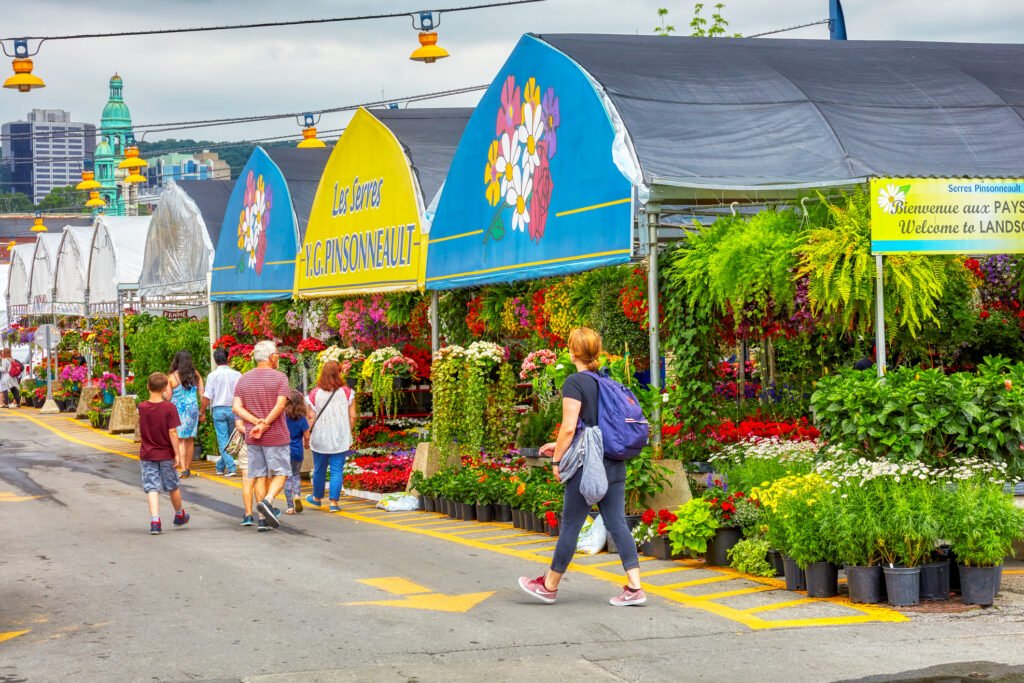
Canadian People Walking Nearby The Greenhouse Flower Shops At Atwater Market In Montreal, Quebec, Canada – June 2018
Season
Signature Offerings
Spring
Morel mushrooms, maple sap ciders
Summer
Wild blueberry jams, Lac St-Jean strawberries
Autumn
Cider from Domaine des Remparts, spiced squash
Winter
Maple-glazed meats, preserved wild game
“A good shopper asks questions,” says Chef Simon, who buys daily at Atwater. “Ask when it was picked, how it was cured.” His advice reshape your Montreal food shopping: you now inspect the blush on strawberries for ripeness, taste cheese wheels before choosing.
Seek out La Maison du Fromage for aged cheddar aged in Quebec’s humid cellars
Pair apple varieties from Cidrerie du Moulin with the season’s cheeses
Sample pâtés from Boucherie Charcuterie for texture before buying
The markets reveal Quebec’s duality: where Acadian blood sausages meet modernist charcuterie. These are places where every transaction feels like a handshake with the land. Like Verona’s vibrant markets celebrate heritage, here Quebec’s flavors assert their place. Leave room in your luggage for a jar of Domaine Pinnacle’s spiced apple butter, a taste of the province’s culinary resilience.
The journey home begins at these stalls, where Quebec artisanal products transform into souvenirs that carry the soil’s memory.
The Coffee and Café Scene: Montreal’s European Rhythm
Walking through Plateau Mont-Royal, you’re hit with the smell of coffee at every corner. Montreal’s café culture is all about slowing down and enjoying each sip. Your go-to, Café Lomi, is among the best coffee shops Montreal has to offer. Their Ethiopian pour-over stations are a sensory journey. Here, you see the coffee scene in all its glory: a mix of European finesse and Quebec’s warmth.
“Un café et un croissant, s’il vous plaît.” This simple phrase unlocks a world where conversations linger like steam over espresso cups.
European-style cafes in Montreal are all about contrasts. Café Dada has a simple look but serves bold Kenyan coffee. La Bête à Cafés mixes Vietnamese drip coffee with poutines. They all share a dedication to quality, just like Parisian cafes but with a local twist.
Café
Signature Brew
Vibe
Café Lomi
Ethiopian Yirgacheffe
Artisanal, minimalist
La Bête à Cafés
Vietnamese-style iced coffee
Quirky, multicultural
Café Papillon
Single-origin filter
Cozy, historic
Try the allongé, a Quebecois coffee that’s espresso with hot water. Enjoy it with a flaky croissant from Boulangerie Roset. It’s more than coffee; it’s a lifestyle where every visit is a memorable experience.
Fine Dining with a Quebec Twist: Where Tradition Meets Innovation
Walking into a top Montreal restaurant is like stepping into a story. The city’s Montreal fine dining scene balances tradition and innovation. Chefs like Martin Picard of Au Pied de Cochon turn simple dishes into art, keeping tradition alive.
“Our ingredients are our storytellers,” says Chef Normand Laprise of Toqué!. His menus show Quebec’s seasons through chanterelles and wild game. He pairs Gulf of St. Lawrence snow crab with Labrador tea sauces.
Chef Spotlights: Visionaries Shaping Montreal’s Food Future
Top Montreal chefs mix old techniques with new, making maple syrup into foams.
At L’Atelier de Joel Robuchon, Quebec meets French cuisine, blending intimacy with innovation.
Reservation Tips and Etiquette
Montreal restaurant reservations need planning: book 3-6 months ahead. Dinners start at 8pm, following Europe’s pace. Tipping 15–20% is common, but places like Le Mousso offer luxury without high prices. Confirm if you prefer French or English, as many chefs speak both.
Enjoying caribou tartare or a charcuterie board aged in the cold is a taste of history and future.
Conclusion: Why Montreal’s Food Scene Continues to Captivate American Palates
Montreal’s food scene is a must-see for anyone who loves food. It’s a place where French cooking meets North American flavors. This mix creates a dining experience that’s both new and familiar.
From the smoky taste of Schwartz’s smoked meat to the crispy St-Viateur bagel, Montreal’s food is inviting. It’s a journey through flavors and history.
What makes Montreal special is its mix of old and new. You can find traditional poutine spots and modern tasting menus side by side. Exploring its streets and markets like Jean-Talon shows how food can bridge cultures.
Montreal is easy to get to, making it a perfect destination for food lovers. A short flight or drive brings you into a world of European-style cafes. But, the menus are bilingual, and maple syrup is a shared love.
Returning to Montreal is always exciting. You get to try new dishes and see how chefs keep Quebec’s heritage alive. The city’s festivals and energy mean every visit is full of new discoveries.
Sharing meals with others in Montreal is unforgettable. It’s a place where your taste buds can explore. Like finding the secrets of Tuscany without leaving North America, Montreal offers a culinary adventure that stays with you long after you leave.
FAQ
What makes Montreal’s food scene unique?
Montreal’s food scene is a mix of European traditions and North American flair. It has French roots, Indigenous influences, and dishes from many immigrant groups. This mix creates a unique taste that shows both the city’s history and its modern side.
Are there any must-try dishes in Montreal?
Yes! You must try the famous smoked meat, Montreal bagels, and poutine. Also, don’t miss out on tourtière, pouding chômeur, and seafood platters. These dishes show the diversity of Montreal’s food.
How can I experience Montreal’s culinary culture?
To dive into Montreal’s food culture, explore its markets, cafés, and restaurants. Visit places like Jean-Talon Market and Atwater Market to meet local producers. Also, join seasonal food festivals to taste the best of Montreal.
Is Montreal accessible for American travelers?
Yes! Montreal is easy for Americans to get to, with quick flights and good exchange rates. Its public transport and English-speaking areas make it welcoming for visitors eager to try its food.
What are the best times to visit Montreal for food enthusiasts?
Montreal is great for food lovers all year. For seasonal treats, visit during Poutine Week in February or summer when markets are full of fresh food.
What should I know about dining etiquette in Montreal?
Montreal’s dining etiquette is influenced by Europe. Make reservations, as dinner starts late. Tipping 15-20% is standard, just like in the U.S.
How does Montreal’s café culture differ from other cities?
Montreal’s cafés are all about taking your time. People enjoy their coffee and conversation, not rushing. This European-style makes cafés perfect for enjoying food and watching people.